This retrospective case study examined seven patients who developed Marjolin’s Ulcer, a rare skin cancer arising from old burn scars, over a 20-year period in Brazzaville, Congo, revealing that all cases originated from inadequately treated thermal burns with an average latency period of 34 years before malignant transformation, and the findings underscore the critical importance of quality burn care and early detection to prevent this highly fatal condition.
Abstract
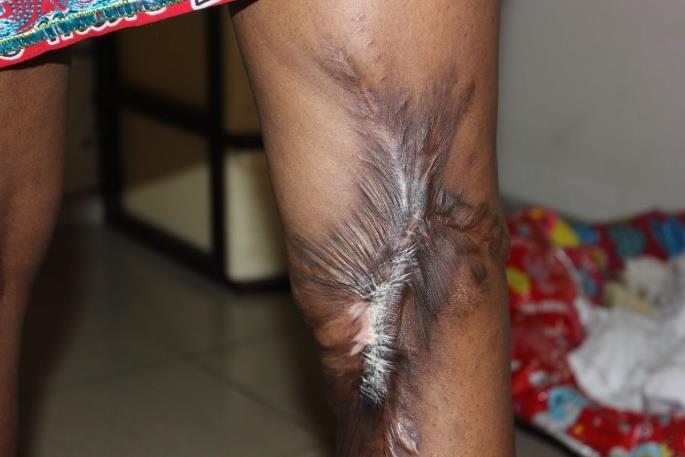
Marjolin’s Ulcer (MU) refers to cutaneous malignancies arising from old, unstable scars. The general objective of this study was to report the MU cases in Congo with a literature review.
It was a retrospective study conducted at the University Teaching Hospital in Brazzaville from January 1998 to December 2017 (a 20-year period). The inpatients with cutaneous cancer histologically confirmed, who had progressive scarring skin lesions, were included. The epidemiological, clinical, histopathological and therapeutical variables were collected.
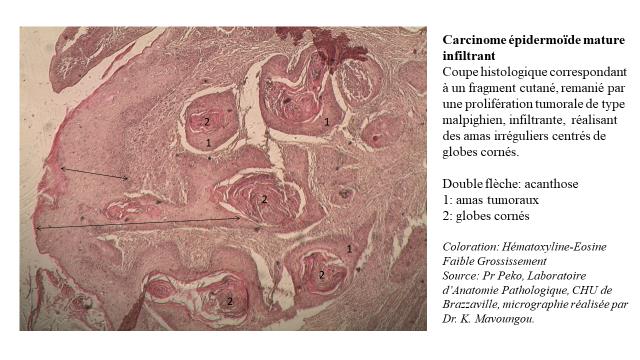
Seven patients were identified. They represented 1.9% of skin cancers. The median age was 44.4 years. The female predominance was noted with a sex ratio of 2.5. The burn scars were the etiological factor found in all our patients (100%). None of the patients received appropriate care for their initial wounds. The average age at MU onset was 34 years. The anatomopathologic examination revealed a squamous cell carcinoma in all our patients (100%). Carcinologic excision was performed in 1 patient (14.28%). The amputation: three (03) patients (42.85%), and the disarticulation: two (02) patients (28.57%). The chemotherapy was administered to six (06) patients (85.71%). The decease arose five (05) patients (71.42%) and the entire remission reached to a woman patient (14.28%).
This study confirmed the rarity and severity of MU; it also revealed the late diagnosis and high mortality rate. The care of burn and chronic injury quality, patient awareness, and caregivers’ training could help improve the prognosis of this condition.
Key Takeaways
The study confirms that Marjolin’s Ulcer remains a rare but severe complication of burn injuries, representing 1.9% of skin cancers in this Congolese population, with all seven cases arising from thermal burns sustained primarily during childhood.
A striking finding was that none of the patients received appropriate initial care for their burn wounds, with 85.71% relying on traditional treatment methods, highlighting how inadequate wound management creates conditions for malignant transformation decades later.
The average latency period of 34 years between the initial burn and cancer diagnosis emphasizes the importance of long-term surveillance of burn scars and patient education about warning signs such as abnormal healing and contact bleeding.
The high mortality rate of 71.42% reflects the consequences of late diagnosis, as all patients presented with advanced-stage disease requiring radical interventions, including limb amputation, underscoring that prevention through quality burn care remains far more effective than treating established cancers.
“The care of quality of burns and chronic injuries, the awareness of patients together with the care givers training could help to improve the prognosis of this affection.”

By Dr Grâce Mabiala-Maye
Physician and Maternal Health Researcher