This qualitative study examined how private practice, hospital-based, and community-based doula models function within U.S. maternity care systems, identifying systemic barriers to their integration and proposing actionable strategies, including hybrid service models, public health partnerships, and Medicaid coverage expansion, to improve accessibility and reduce maternal health disparities for marginalized populations.
Abstract
Background:
Maternal and infant health disparities remain a persistent public health issue in the United States, disproportionately affecting systematically marginalized communities. While doulas have been shown to improve birth outcomes and reduce inequities, their integration into maternity care systems remains limited.
Objectives:
This study aimed to explore the roles and challenges of different doula models, identify systemic barriers to their integration, and propose strategies for sustainable implementation.
Design:
A qualitative study using a phenomenological approach that adhered to the Consolidated Criteria for Reporting Qualitative Research guidelines.
Methods:
Using purposive and snowball sampling, 20 stakeholders, including doulas, healthcare providers, Medicaid specialists, and public health professionals, were recruited from Omaha, Nebraska, and Nashville, Tennessee. Semi-structured interviews were conducted in person and via Zoom, lasting between 30 and 90 min. Thematic analysis, supported by Dedoose software, was used to identify key themes related to doula integration, systemic barriers, and policy recommendations. Data credibility was reinforced through member-checking and an audit trail documenting coding decisions.
Results:
Three primary themes emerged: (1) Doula Types and Their Impact, private practice doulas offer individualized care but face financial barriers; hospital-based doulas improve communication but encounter institutional constraints; community-based doulas provide culturally competent care but struggle with sustainability. (2) Strategies for Sustainable Integration, hybrid models enhance continuity of care, public health partnerships support funding and advocacy, and advisory boards foster interdisciplinary collaboration. (3) Policy Recommendations, expanding Medicaid coverage, increasing equitable reimbursement rates, and establishing standardized doula training and certification to improve accessibility and professional recognition.
Conclusion:
Implementing policy reforms and fostering collaborative models can help optimize doula services and improve perinatal outcomes, particularly for systematically marginalized populations. Sustainable funding, standardized certification, and public health partnerships are essential for improving accessibility to doula care.

Key Takeaways
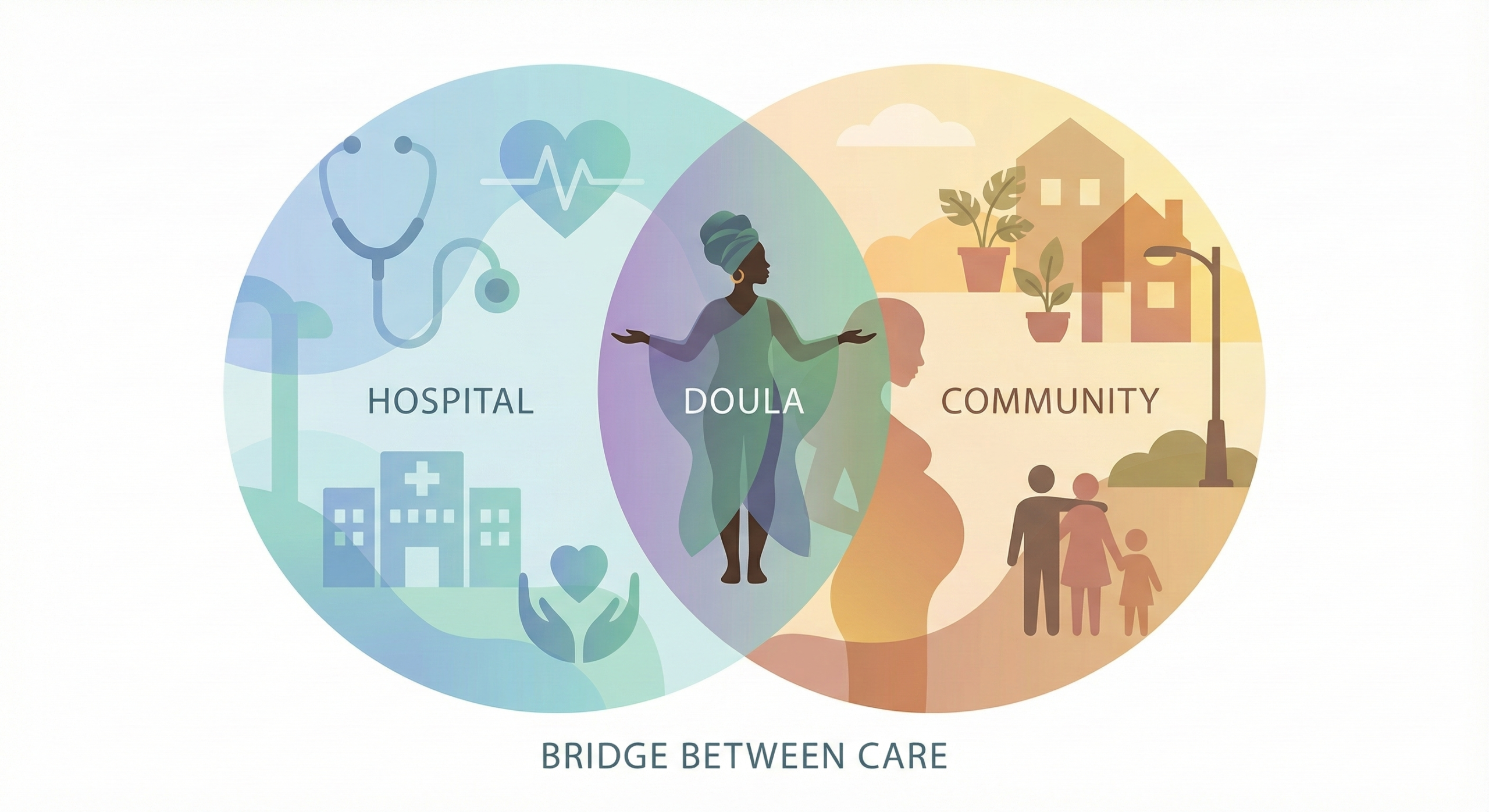
The study reveals that each doula model brings distinct value and faces unique obstacles. Private practice doulas foster deep, individualized relationships with birthing people but remain financially out of reach for low-income families due to costs ranging from $1,500 to $2,500. Hospital-based doulas improve communication between patients and clinical teams, yet they encounter institutional resistance and role ambiguity that can limit their advocacy capacity. Community-based doulas excel at providing culturally competent, trust-centered care for marginalized populations, but their programs often depend on unstable grant funding that threatens long-term sustainability.
A central contribution of the research is the proposal of hybrid models that combine the strengths of hospital-based and community-based approaches, enabling continuity of care while maintaining cultural responsiveness and institutional access. The study also highlights the importance of public health partnerships for securing sustainable funding and of advisory boards for fostering collaboration among doulas, healthcare providers, and policymakers.
On the policy front, the findings emphasize that expanding Medicaid coverage with equitable reimbursement rates is essential for making doula care accessible to those who need it most, and that standardized training and certification frameworks must balance professional rigor with accessibility to avoid excluding doulas from underrepresented communities. Taken together, these insights offer a roadmap for integrating doula services into maternity care systems in ways that directly address the persistent disparities affecting Black, Indigenous, and low-income birthing individuals.


“Doula care is not a luxury but a vital intervention for maternal health equity, and expanding access requires intentional policy reform, sustainable investment, and models that honor both clinical rigor and community-centered practice.”

By Dr Grâce Mabiala-Maye
Physician and Maternal Health Researcher